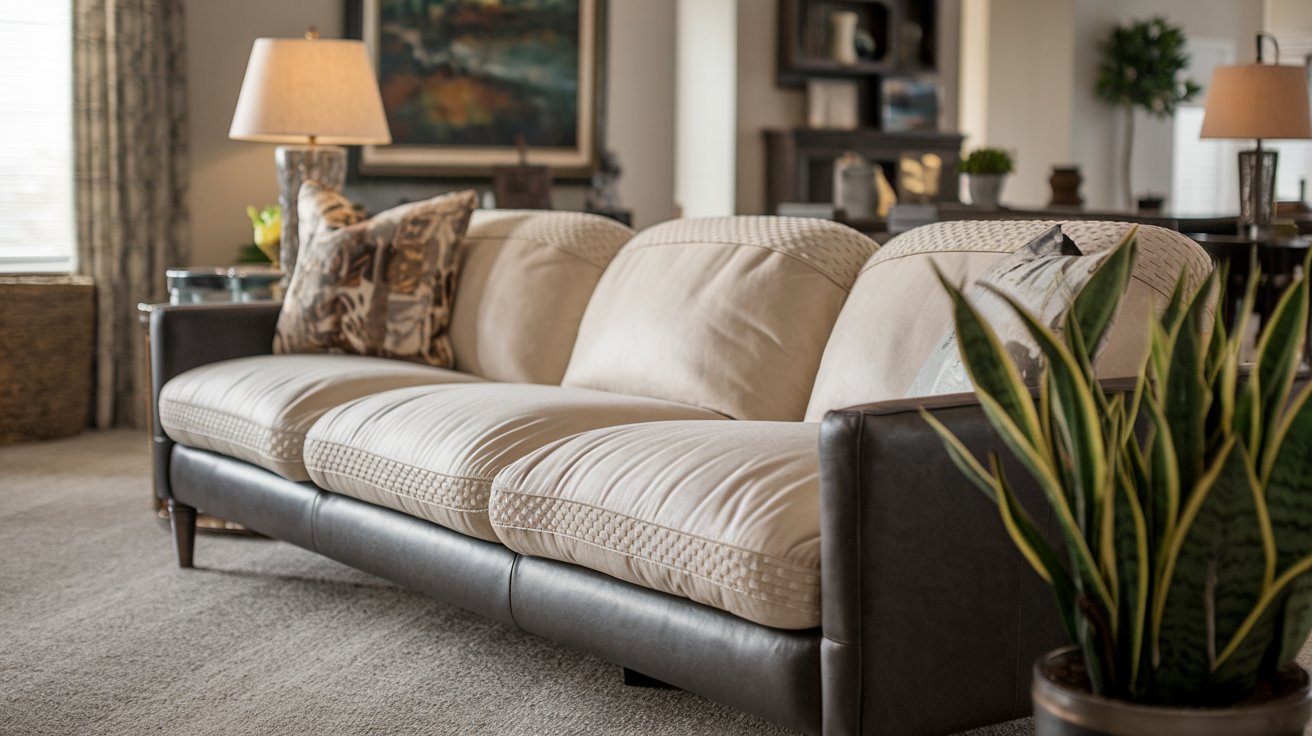
High density foam for couch cushions provides superior support and longevity compared to standard foam options. With proper density ratings between 1.8-2.5 lbs per cubic foot, this foam maintains shape for years while delivering optimal comfort for daily use.
Understanding High Density Foam Specifications
Foam density measures the weight of foam per cubic foot, with high density foam typically ranging from 1.8 to 2.5 pounds per cubic foot. This measurement directly correlates to the foam’s durability, support level, and expected lifespan. Higher density foams compress less over time, maintaining their structural integrity even with daily use.
The Indentation Load Deflection (ILD) rating measures foam firmness, typically ranging from 25-65 for couch cushions. A rating of 32-36 ILD provides medium firmness suitable for most users, while ratings above 40 offer firmer support for those preferring less sink-in comfort.
Density Rating Classifications
Low density foam (1.2-1.8 lbs/ft³) offers initial softness but deteriorates quickly, typically lasting 2-3 years. Medium density foam (1.8-2.0 lbs/ft³) provides balanced comfort and durability for moderate use, while high density foam (2.0-2.5 lbs/ft³) delivers maximum longevity and support for heavy daily use.
ILD Firmness Measurements
The ILD rating system uses standardized testing to measure how much weight is required to compress foam by 25% of its thickness. Soft cushions measure 25-32 ILD, medium cushions range 32-40 ILD, and firm cushions exceed 40 ILD, with some specialty foams reaching 65 ILD for therapeutic applications.
Types of High Density Foam Materials
Polyurethane foam remains the most common choice for couch cushions, offering excellent value and customizable density options. Memory foam provides superior contouring but may retain heat, while latex foam delivers natural antimicrobial properties with exceptional resilience and breathability.
Conventional Polyurethane Foam
Conventional polyurethane foam dominates the furniture market due to its cost-effectiveness and versatility. High density polyurethane foam maintains consistent support across various temperature ranges and resists compression set when manufactured to quality standards exceeding ASTM D3574 specifications.
Memory Foam Options
High density memory foam (4-6 lbs/ft³) provides pressure relief through slow recovery and body contouring. While heavier than conventional foam, memory foam cushions offer therapeutic benefits for users with joint pain, though they may feel warmer due to their dense cellular structure.
Natural Latex Foam
Natural latex foam delivers superior durability with densities ranging 4-6 lbs/ft³ while maintaining excellent breathability. This eco-friendly option resists dust mites and mold naturally, making it ideal for users with allergies, though it commands premium pricing compared to synthetic alternatives.
Measuring and Sizing Couch Cushions
Accurate measurement ensures proper cushion replacement and optimal comfort. Measure length, width, and thickness of existing cushions, then subtract 1 inch from length and width measurements to account for fabric compression during upholstery installation.
Standard couch cushion dimensions typically range 20-24 inches in depth, 18-30 inches in width, and 4-6 inches in thickness. Custom sizing accommodates unique furniture designs, with most foam suppliers offering cutting services for precise fit requirements.
Installation and Replacement Process
Replacing couch cushion foam requires basic tools including a utility knife, measuring tape, and spray adhesive if needed. Remove existing foam carefully to preserve fabric covers, noting any batting or additional layers for accurate reconstruction.
Professional installation ensures optimal results, particularly for complex designs with multiple foam layers or specialized contouring. DIY replacement works well for standard rectangular cushions using high density foam cut to precise measurements.
Cost Analysis and Value Comparison
High density foam pricing in 2024 ranges $15-35 per cubic foot depending on density rating and foam type. While initial costs exceed low density alternatives, the extended lifespan of 8-12 years versus 2-3 years provides superior long-term value for frequent use furniture.
Bulk purchasing reduces per-unit costs significantly, with full couch sets offering 15-25% savings compared to individual cushion replacement. Premium foam options like natural latex command $40-60 per cubic foot but deliver exceptional durability and health benefits.
Budget Planning Strategies
Effective cushion replacement budgeting considers both immediate costs and long-term durability benefits. Replacing all cushions simultaneously ensures consistent comfort and appearance while maximizing volume discounts from suppliers specializing in furniture foam.
Cost Per Year Analysis
Calculating annual foam costs reveals true value propositions. High density foam at $25 per cubic foot lasting 10 years costs $2.50 annually, while low density foam at $12 per cubic foot lasting 3 years costs $4 annually, demonstrating superior long-term economics.
Maintenance and Care Guidelines
Proper maintenance extends high density foam lifespan significantly through regular rotation, appropriate cleaning, and protection from excessive moisture. Rotate cushions monthly to distribute wear evenly, and vacuum regularly to remove debris that can accelerate foam degradation.
Professional cleaning every 12-18 months removes deep-seated contaminants while preserving foam integrity. Avoid steam cleaning or excessive moisture, which can damage foam cellular structure and promote mold growth in dense foam materials.
Common Problems and Solutions
Foam compression over time is natural but can be minimized through quality selection and proper care. If cushions develop permanent indentations, replacement becomes necessary as compressed foam cannot recover its original support properties.
Odor issues typically result from moisture retention or poor ventilation. High quality foam includes antimicrobial treatments that prevent bacterial growth, while proper air circulation around cushions prevents moisture accumulation and associated odors.
Related video about high density foam for couch cushions
This video complements the article information with a practical visual demonstration.
Questions & Answers
What density rating is best for couch cushions?
For optimal durability and comfort, choose foam with a density rating between 2.0-2.5 lbs per cubic foot. This density provides excellent support for daily use while maintaining shape for 8-12 years. Lower densities may feel initially comfortable but compress quickly with regular use.
How long does high density foam last in couch cushions?
High density foam typically lasts 8-12 years with proper care and regular use. The lifespan depends on foam quality, usage frequency, and maintenance practices. Premium high density foams can exceed 15 years while maintaining adequate support and comfort levels.
Can I cut high density foam to fit my couch cushions?
Yes, high density foam can be cut using a sharp utility knife or electric carving knife for precise edges. Measure carefully and cut slowly for clean lines. Many foam suppliers offer professional cutting services that ensure precise dimensions and smooth edges for better appearance.
What’s the difference between high density foam and memory foam?
High density foam refers to weight per cubic foot (1.8-2.5 lbs), while memory foam describes temperature-sensitive material that contours to body shape. Memory foam can also be high density (4-6 lbs/ft³) but responds differently to pressure and temperature than conventional polyurethane foam.
How much does high density foam cost for couch cushions?
High density foam costs $15-35 per cubic foot in 2024, depending on specific density rating and foam type. A typical couch cushion (22x20x5 inches) requires about 1.3 cubic feet, costing $20-45 per cushion. Bulk orders often provide 15-25% discounts for multiple cushions.
Is high density foam better than springs for couch cushions?
High density foam offers consistent support and eliminates spring noise, sagging, and potential spring failure. While quality springs provide good support, high density foam delivers more uniform comfort, requires less maintenance, and typically lasts longer without developing uncomfortable pressure points or squeaking.
| Foam Type | Density Range | Expected Lifespan | Cost Per Cubic Foot |
|---|---|---|---|
| Conventional Polyurethane | 1.8-2.5 lbs/ft³ | 8-12 years | $15-25 |
| High Density Memory Foam | 4-6 lbs/ft³ | 10-15 years | $25-40 |
| Natural Latex Foam | 4-6 lbs/ft³ | 12-20 years | $40-60 |